Ravenna is one of Italy’s most surprising cities. Tucked into the Emilia-Romagna region near the Adriatic coast, it was once the capital of three different empires and is now home to eight UNESCO World Heritage Sites. It’s where you’ll find the world’s finest Byzantine mosaics, the tomb of Dante Alighieri, the palazzo where Lord Byron wrote and fell in love, and a food culture rooted in one of Italy’s great culinary regions.
- See Ravenna's breathtaking Byzantine mosaics at San Vitale, Galla Placidia, Sant'Apollinare Nuovo and Classe, shimmering colors and 5th to 6th century masterpieces.
- Follow Dante and Byron in Ravenna, visit Dante's tomb, Casa Dante and Palazzo Guiccioli, walking the streets that inspired literary giants.
- Join a mosaic workshop to learn traditional tile cutting, create a personal souvenir, and time your visit for the Biennial of Contemporary Mosaics.
- Bike flat scenic routes to Sant'Apollinare in Classe, Marina di Ravenna and the Po Delta for beaches, birding and relaxed coastal vibes.
- Take guided walking tours, grab a Ravenna Pass for combo site access, and opt into eco choices promoted by the Footprints Project.
This guide covers everything you need to plan your visit: what to see, how long to stay, how to structure your time, where to eat and where to sleep. It’s built for cultural travellers who want to go deeper than the highlights. If you love history, art and places that feel authentic, Ravenna belongs on your Italy list.
Is Ravenna worth visiting?
Yes, without question. Ravenna is one of the most rewarding cities in Italy for travellers who care about art, history and culture. It’s not as well known as Rome, Florence or Venice, but that’s part of what makes it special.
The mosaics alone justify the trip. Ravenna’s eight UNESCO sites contain some of the best-preserved early Christian and Byzantine art in the world, and you can stand right in front of them without crowds or barriers. The colours are extraordinary — gold leaf, deep blue and emerald green that still glow after 1,500 years.
Beyond the mosaics, Ravenna is where Dante Alighieri spent his final years and where Lord Byron wrote some of his most important work. The city has a compact historic centre you can walk across in 20 minutes, excellent food rooted in Emilia-Romagna’s traditions, a strong cycling culture and a genuine commitment to slower, more thoughtful travel. If you want a different side of Italy, the quieter, deeper, less visited one, Ravenna delivers it.
Where is Ravenna?
Ravenna is in the Emilia-Romagna region of northern Italy, about 75 kilometres southeast of Bologna. It sits close to the Adriatic coast, with the sea just a short bike ride from the historic centre.
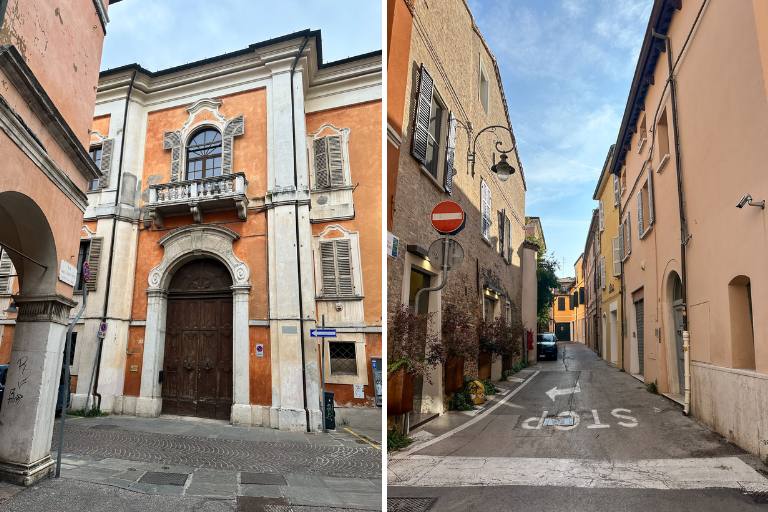
It pairs well with several nearby destinations. Bologna is the most obvious base if you’re day-tripping, but Ravenna also works well with Ferrara, Rimini, Comacchio and the Po Delta. Ravenna is compact and walkable, and most of the main sites are within easy reach on foot or by bike.
How long do you need in Ravenna?
You can see the highlights in one day, but two or three days give you time to go beyond them.
- One day: the main mosaics, Dante’s tomb and the historic centre
- Two days: mosaics, Dante, Byron, local food and a mosaic workshop
- Three days: everything above, plus Sant’Apollinare in Classe, biking, Marina di Ravenna or the Po Delta
A short history of Ravenna, Italy
As with many other cities in Italy, Ravenna’s story starts with the Roman Empire. Founded as a Roman port, it then became the capital of the Western Roman Empire in 402 AD. After the fall of Rome, the Ostrogoths under King Theodoric the Goth made it the capital of their kingdom. They were the ones to establish the Kingdom of Italy after the fall of Rome.
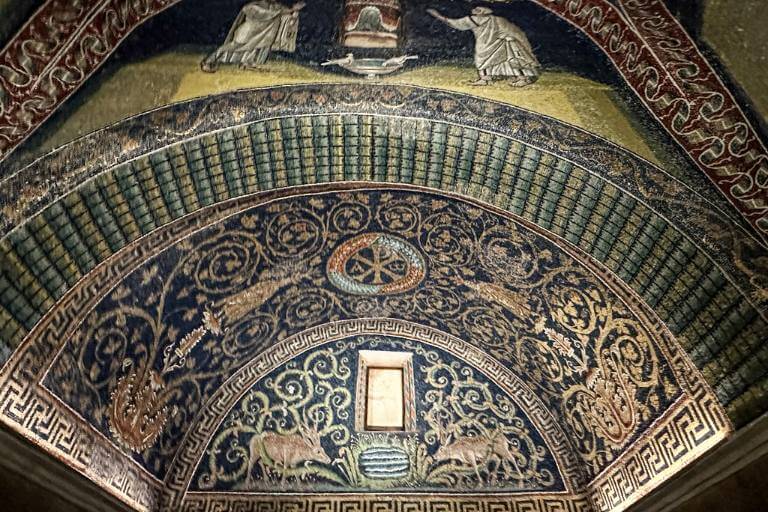
Ravenna’s story continued after its conquest by the Byzantines under Emperor Justinian in 540 AD. It became the seat of the Byzantine rule in Italy for the next two centuries, leaving a lasting architectural and artistic legacy we can still admire today.
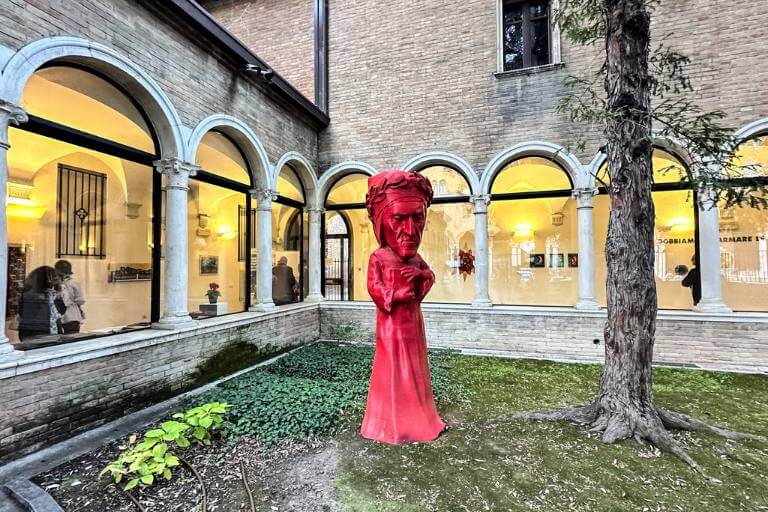
That Byzantine period profoundly shaped the city we know today. Emperors poured wealth into churches, covering walls and ceilings with glittering mosaics that still wow today, some 1,500 years after they were created. Ravenna is home to eight UNESCO World Heritage Sites from the early Christian era, where you can admire the Byzantine mosaics.
Best things to do in Ravenna, Italy
If you’re looking for an unforgettable cultural adventure that blends history with art and tradition, then you’ll love exploring Ravenna. Here are some of my favourite things to see in Ravenna on your trip, starting with the must-see mosaics.
Pro tip: With the Ravenna pass, you can explore three UNESCO World Heritage Sites with one combo ticket. Get yours today.
1. See Ravenna’s Byzantine mosaics
The mosaics are the main reason people come to Ravenna, and they don’t disappoint. When the city became the western capital of the Byzantine Empire, artists were brought in from Constantinople to decorate the churches. They used millions of tiny glass and stone tiles to create intricate scenes of biblical stories, imperial portraits and symbolic imagery.
With limited time, prioritize San Vitale, Galla Placidia and Sant’Apollinare Nuovo. These three give you the full range of Ravenna’s mosaic tradition in a single morning. Add Classe if you have an afternoon or can make a separate trip
Today, they are recognized as some of the best-preserved examples of Byzantine art outside Istanbul. Looking at them today, it’s hard to believe that they are from the 5th and 6th centuries. These mosaics also made Ravenna the centre of this particular art form, still used today.
Basilica di San Vitale
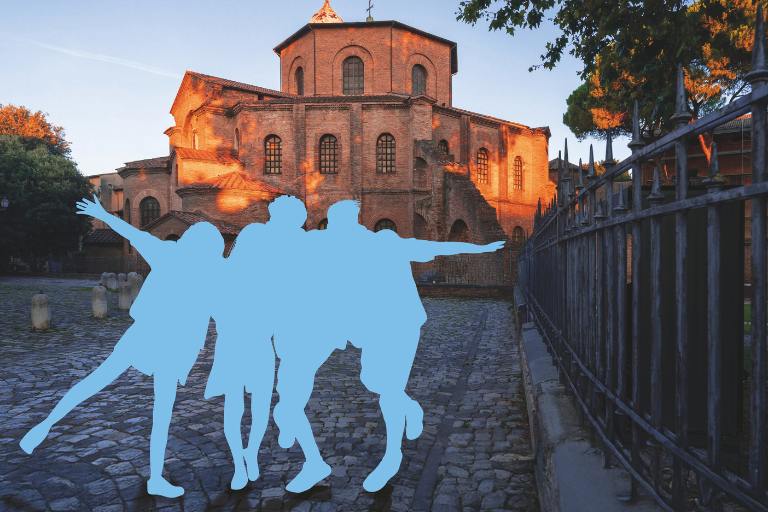
The Basilica of San Vitale is where you should start. Built in the 6th century, this octagonal church holds some of the finest Byzantine mosaics and stunning architectural details.
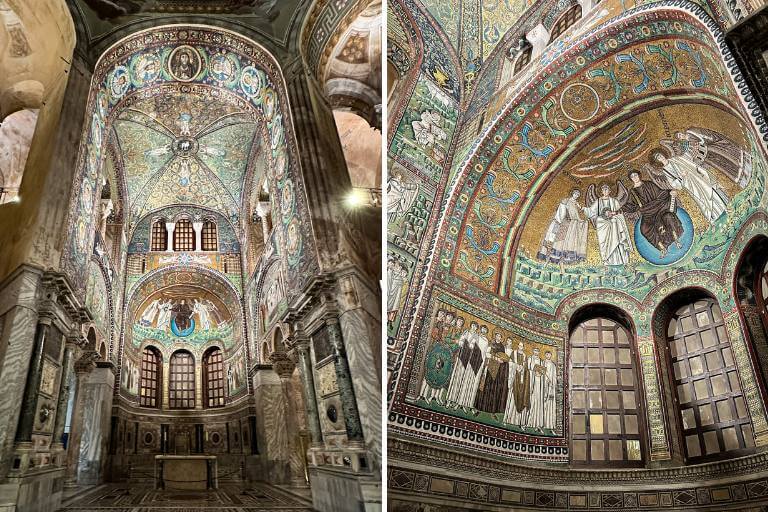
Look up at the apse, and you’ll see Emperor Justinian and Empress Theodora in full regalia, leading their courts in eternal procession. The colours are emerald greens, deep purples and gold leaf that catch every angle of light and feel impossibly new.
Mausoleum of Galla Placidia
The Mausoleum of Galla Placidia is another must-visit spot just behind the basilica. It’s small and unassuming from the outside, but once you step through the door, you’ll see that it’s bigger than you think.
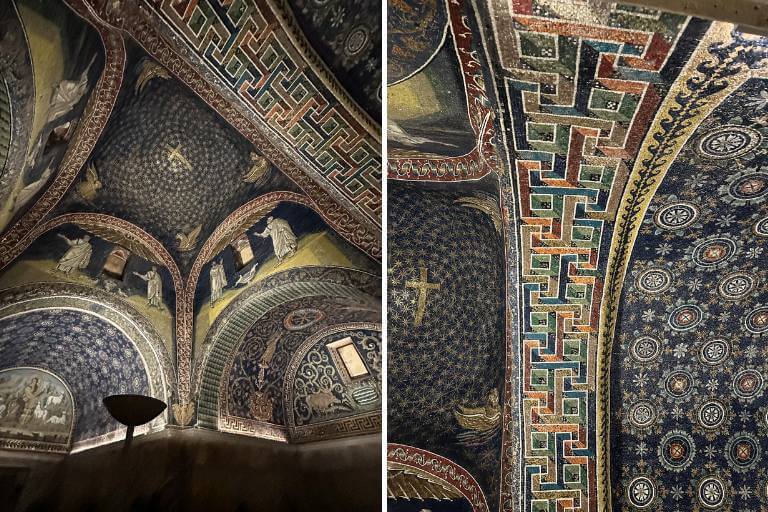
The interior glows blue and gold, with stars covering the vaulted ceiling like a night sky. The mosaics here date to around 425 CE, making them among the oldest in the city. Don’t miss them – book your experience today.
Sant’Apollinare Nuovo
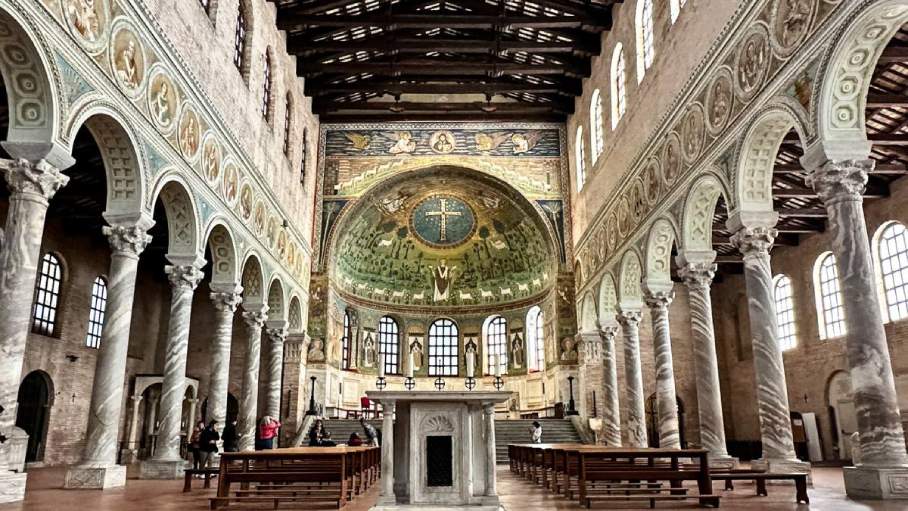
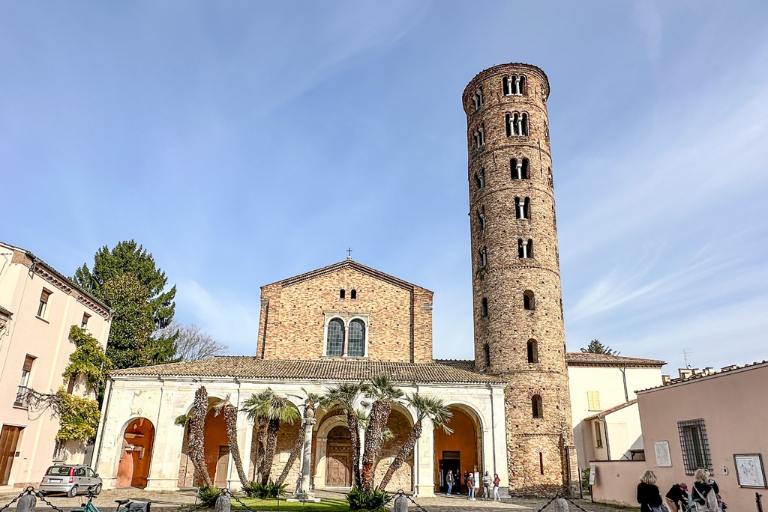
Sant’Apollinare Nuovo was originally an Ostrogothic palace chapel before becoming a Byzantine church. The long nave features two stunning mosaic processions: one of virgin martyrs and one of male martyrs, both walking toward Christ and the Virgin Mary. Above them are scenes from Christ’s life in vivid detail.
Sant’Apollinare in Classe
Just outside the city center is Sant’Apollinare in Classe. The massive church feels a bit out of place in the countryside, but what’s inside is worth the trip. This 6th-century basilica feels more spacious and serene than the others.

The apse mosaic depicts Saint Apollinaris in a green paradise, surrounded by sheep representing the faithful. While the beautiful mosaics are impressive, so is the rest of the building. Book your tickets before you go.
Neonian Baptistery
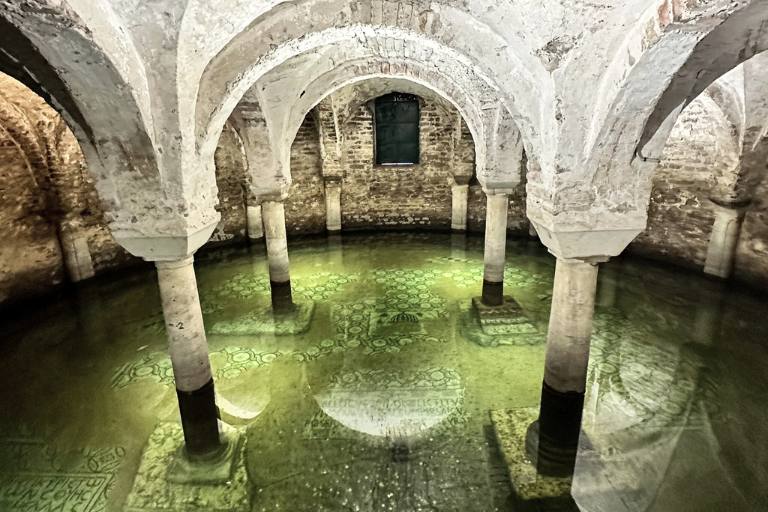
The oldest standing monument in Ravenna was built in the early 5th century. The dome mosaic shows the baptism of Christ surrounded by the twelve apostles, rendered in rich gold and blue. It’s one of the city’s most complete and best-preserved interiors.
Arian Baptistery
Built by Theodoric for the Arian Christian community, this smaller baptistery has a dome mosaic similar in subject to the Neonian but distinct in style. It’s easy to overlook, but worth a quick visit if you have time between the main sites.
Archiepiscopal Chapel
A private chapel inside the Archbishop’s Palace, dating to the late 5th century. The mosaics here are more intimate in scale but technically remarkable. Look for the image of Christ as a soldier — a striking piece of early Christian iconography.
Mausoleum of Theodoric
Just outside the centre, this 6th-century tomb was built for Theodoric the Great. It stands apart from the mosaic sites — the structure itself is the main attraction, particularly its massive monolithic roof cut from a single block of Istrian limestone. Worth a short detour.
2. Visit Dante’s tomb and the Zone of Silence
Ravenna is the final resting place of Dante Alighieri, one of the greatest poets in Western literature. He arrived here in exile from Florence and spent his last years finishing the Divine Comedy. He died in Ravenna in 1321, and the city has kept him ever since. Florence has repeatedly asked for his remains, and Ravenna has always refused.
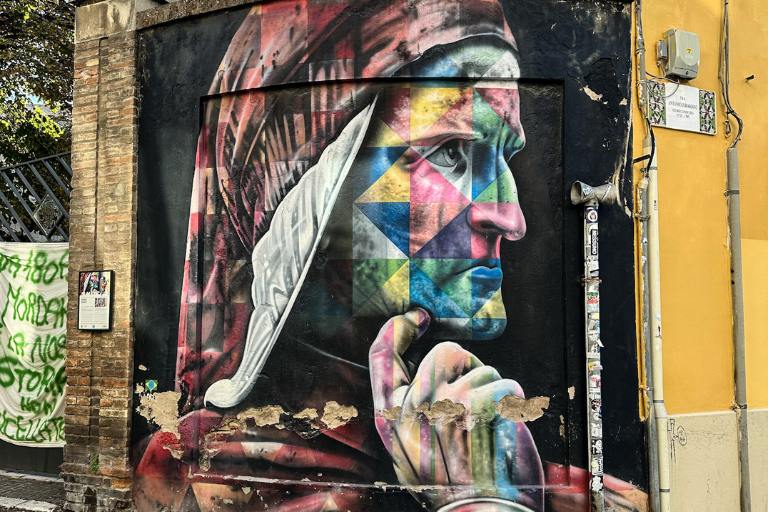
The area around Dante’s tomb is one of the most absorbing parts of the city for literary travellers. Here’s what to see:
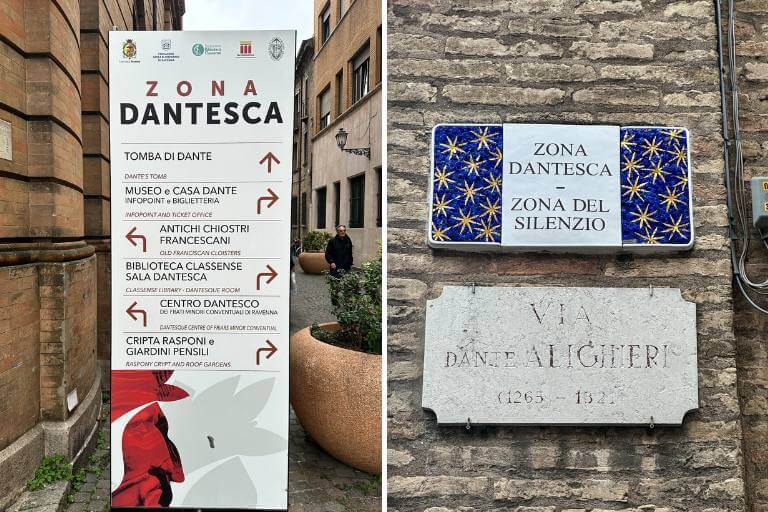
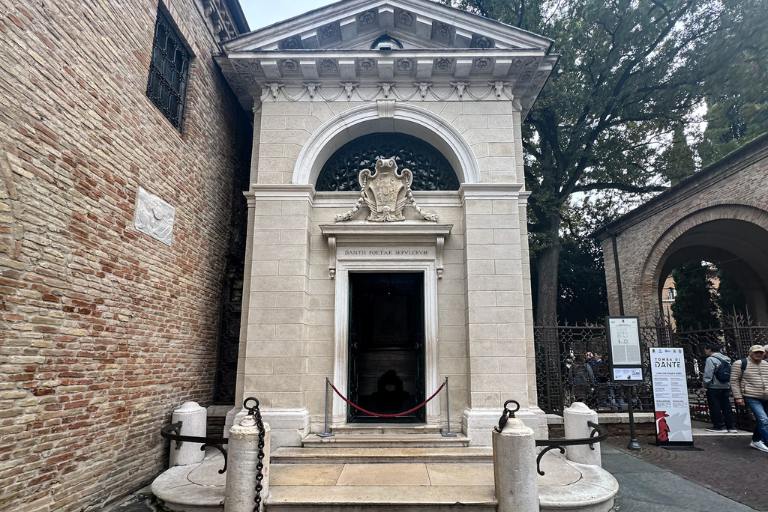
- Dante Alighieri’s Tomb – The poet’s final resting place, a simple neoclassical temple built in 1780. Inside, a marble bas-relief adorns the sarcophagus, and a votive lamp burns with oil donated annually by Florence.
- Basilica of San Francesco – The Romanesque church where Dante’s funeral was held on September 13, 1321. His remains were temporarily buried in a 5th-century sarcophagus inside the church.
- Quadrarco of Braccioforte – A peaceful courtyard where Dante’s remains were hidden multiple times to protect them from being taken to Florence. A mound of earth marks the spot where his bones remained safe during World War II.
- Old Franciscan Cloisters – A former monastery complex where Dante spent time during his years in Ravenna. The tranquil cloisters now house the Museo Dante and host cultural events.
- Museo Dante – Eight rooms tracing Dante’s life, works and lasting influence. See the wooden box that hid his remains for nearly 200 years and the chest used to display them in 1865.
- Casa Dante – A 14th-century villa housing exhibitions, rare manuscripts from the Classense Library, and the coffer that protected the poet’s bones during World War II.
- The Zone of Silence – A traffic-free area designed in the 1920s as a space of peace and respect around Dante’s tomb. Listen for the bell that rings 13 times each evening at dusk, marking the date of his death.
- Classense Library – Home to the Sala Dantesca, where important readings and conferences on Dante take place. The library holds the world’s most complete collection of first and rare editions of his works.
3. Explore Ravenna’s Byron connection at Palazzo Guiccioli
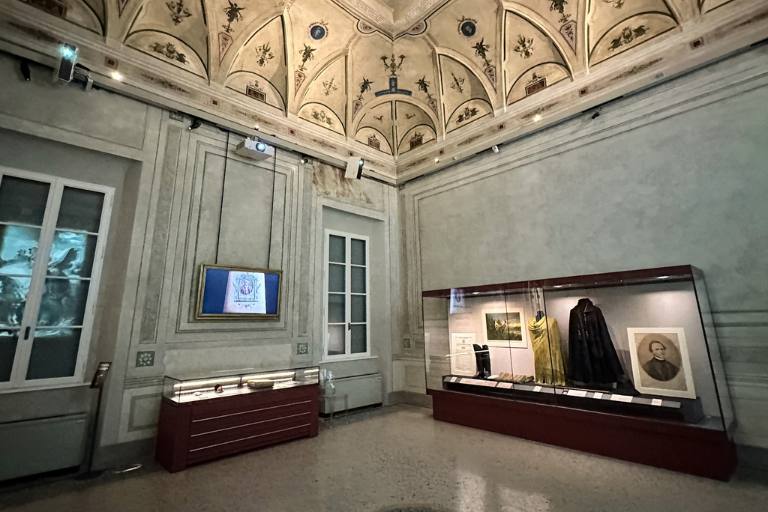
Lord Byron arrived in Ravenna in 1819, following Countess Teresa Guiccioli, a woman he had met at a party in Venice. Despite their age difference and the fact that she was married to a much older man, the two became lovers. Byron moved into Palazzo Guiccioli, where he stayed with the couple and wrote several significant works, including The Prophecy of Dante.
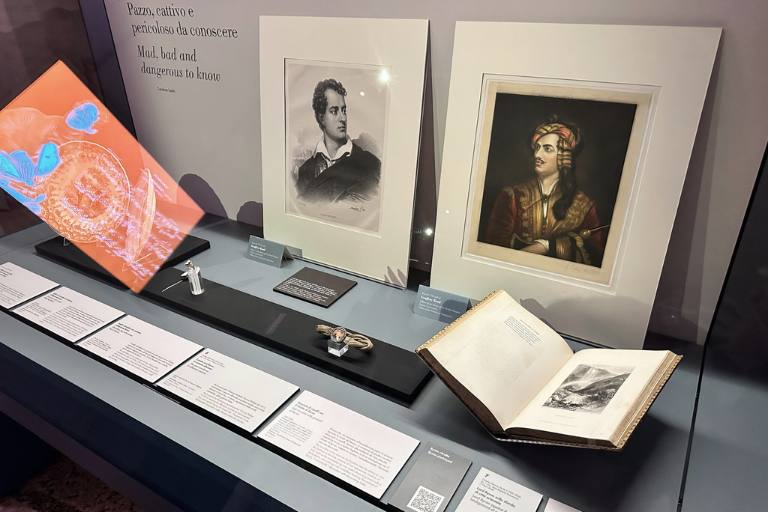
He also got involved in the Risorgimento, the 19th-century Italian independence movement, through Teresa’s family. Byron eventually left Ravenna to fight for Greek independence, where he died in 1824 at 36.
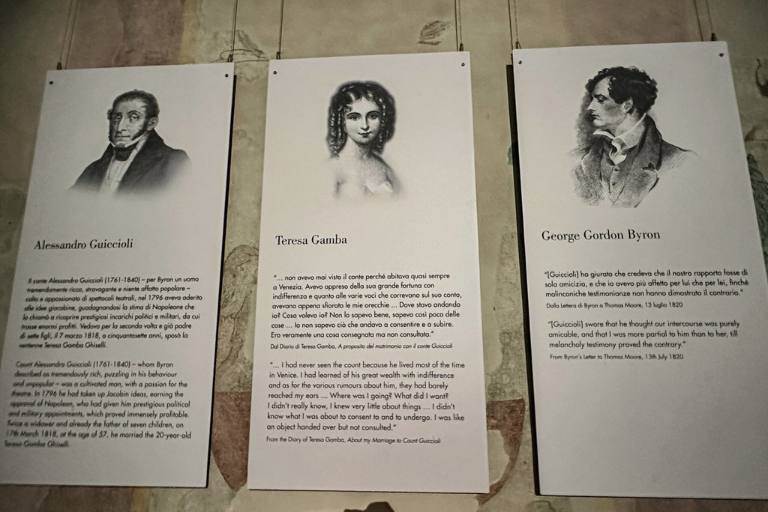
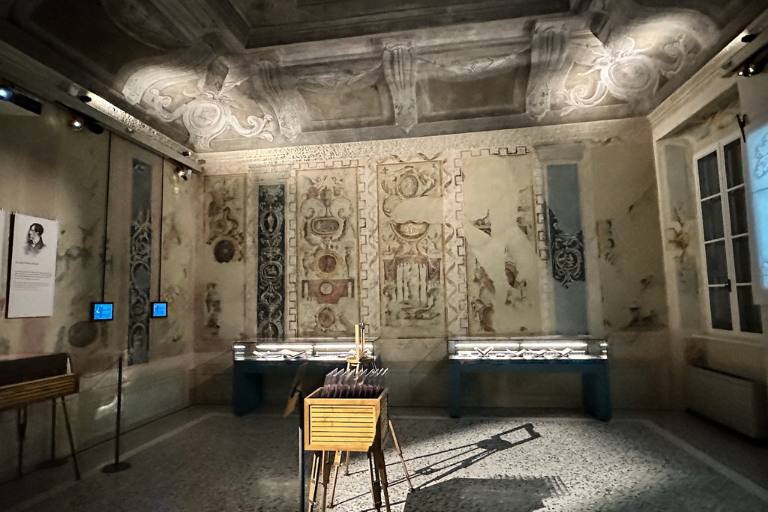
Today, Palazzo Guiccioli houses an interactive museum dedicated to Byron’s life and work. There are letters, busts, personal items and even scraps of his skin, all collected and kept by Teresa. The highlight for me was the interactive component — you can trigger audio and visual narrations to learn more about Byron and his time here. Don’t miss the Risorgimento section either.
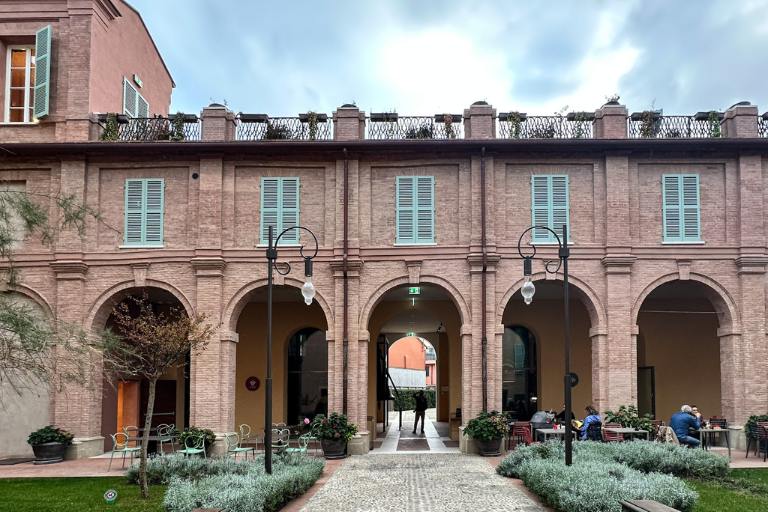
Step into the world of Dante and Byron
Discover Ravenna through the eyes of its literary icons on this immersive audio adventure. Equipped with wireless headphones, you’ll wander the streets that Dante and Byron did as you listen to their stories, accompanied by music and ambient sounds that blend into a captivating experience.
The tour involves walking to several key stops that relate to the authors and their lives in Ravenna. I thoroughly enjoyed it.
When: Saturdays at 3:30 PM (check calendar for other dates)
Where: Tourist Information Office, Ravenna
Duration: 1.5 hours
Price from €12 – Book here
4. Try a hands-on mosaic workshop
Ravenna has working mosaic studios where artisans practice restoration and create new works using traditional methods. The best way to appreciate what you’ve seen in the churches is to try it yourself.
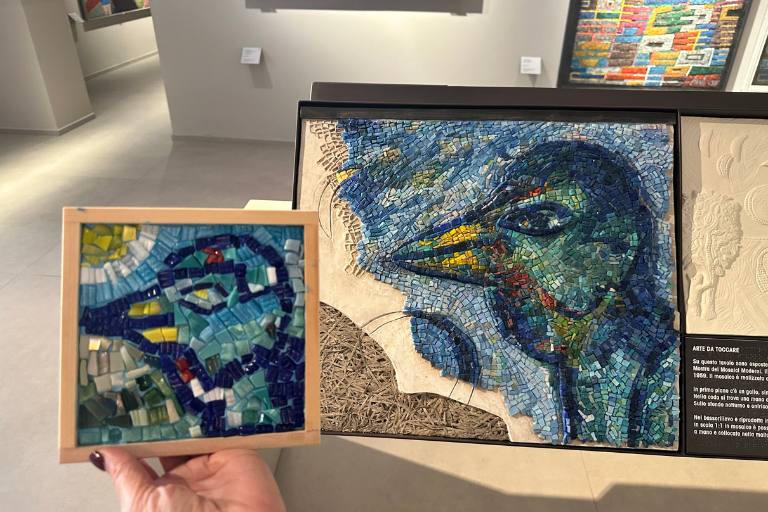
A hands-on mosaic workshop takes you through the basics of cutting and placing tiles — the same techniques used here 15 centuries ago. Sessions usually last a couple of hours, and you leave with a small piece you made yourself. It’s surprisingly relaxing, and it completely changes how you look at the mosaic sites afterward. Good for travellers of all ages, with no artistic experience required.
5. Visit MAR, Ravenna’s art museum
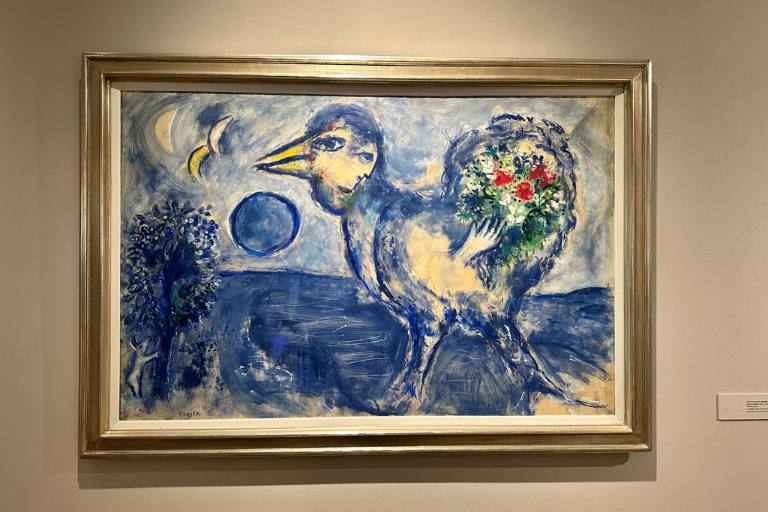
MAR (Museo d’Arte della Città di Ravenna) is worth adding to your visit. The permanent collection includes contemporary mosaic works, and learn how this tradition is still practiced today. The museum also hosts temporary exhibitions throughout the year and is a good venue to try a workshop.
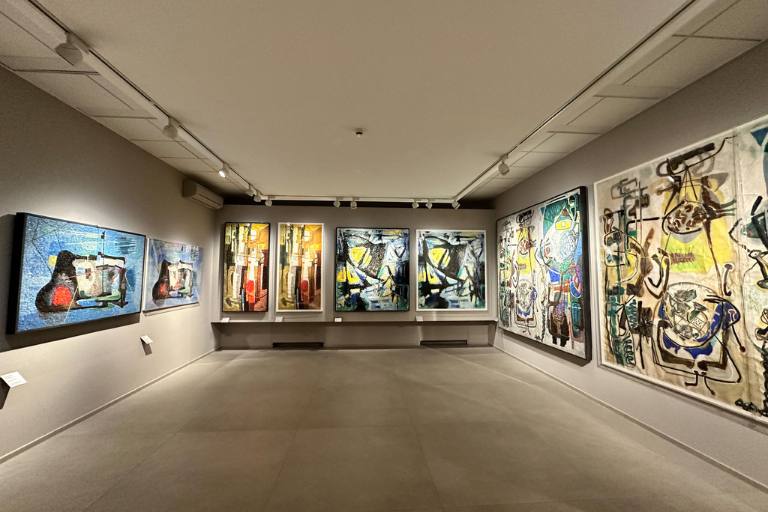
I did a workshop at the MAR, and it was pretty cool. Definitely a must-stop for art lovers.
6. Bike through Ravenna and the surrounding countryside
Ravenna sits on flat terrain, making it one of the best cycling cities in Italy. There are bike paths in and around the city and plenty of routes into the countryside. Exploring by bike was a highlight of my visit as it’s the most natural way to move at Ravenna’s pace.
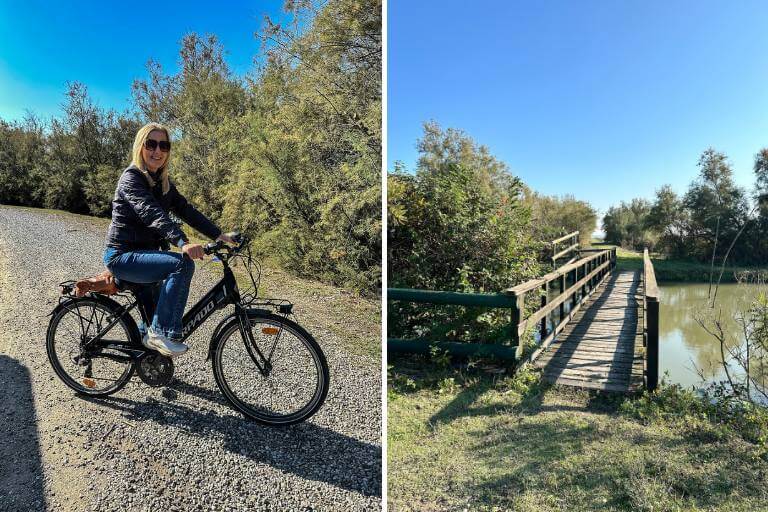
- The Ravenna-Classe route takes you south through pine forests to the Basilica of Sant’Apollinare in Classe. It’s an easy, scenic ride that feels worlds away from city streets.
- Bike to the low-key beach town of Marina di Ravenna (about a 20-minute ride), where you can discover seafood restaurants, a small port and a laid-back vibe. The beaches here aren’t as polished as those in more famous Italian coastal towns, which means fewer crowds and more room to spread out.
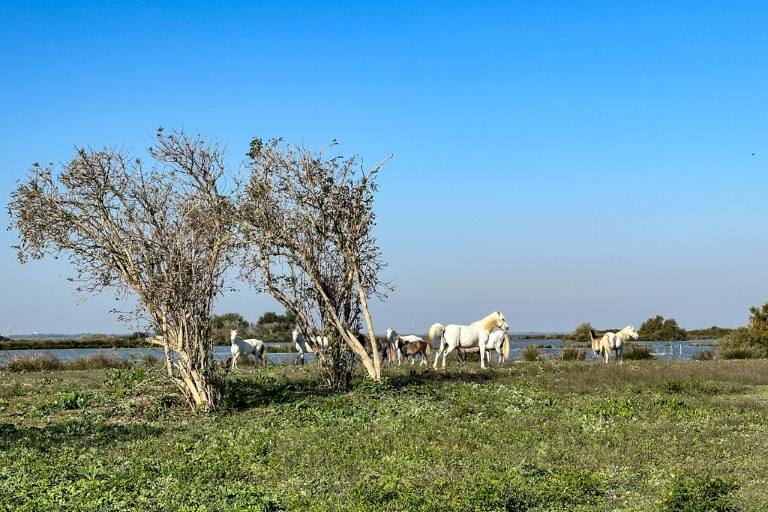
- Don’t miss a chance to explore the Parco del Delta del Po, which protects one of Europe’s most important wetland systems. The Po River delta creates a vast network of lagoons, marshes and channels that attract hundreds of bird species. It’s a paradise for birdwatchers, and you might even spot some wild horses. Take a bike tour with the NatuRa Visitor Center from the small town of Sant’Alberto to explore the biopark.
7. Take a guided tour of Ravenna
A guided tour is one of the best ways to get the most from a city in a short time. Ravenna has strong options for different kinds of travellers.
- Best for first-time visitors and mosaic lovers — Private walking tour with mosaics. Discover Ravenna’s most famous mosaics and the city’s most significant religious buildings — book yours today
- Best for history lovers — Private walking tour with a local expert. Visit four iconic sites — Sant’Apollinare Nuovo, Galla Placidia, San Vitale and the Neonian Baptistery — get yours before you go
- Best for atmosphere and literary travellers — Ravenna by night. See the city after dark and discover a different side of its streets and monuments — book the night tour
How to plan your Ravenna itinerary
One day in Ravenna
One day is enough to see the highlights if you plan ahead. Book the Ravenna pass and start early.
- Morning: San Vitale, Mausoleum of Galla Placidia and the Neonian Baptistery
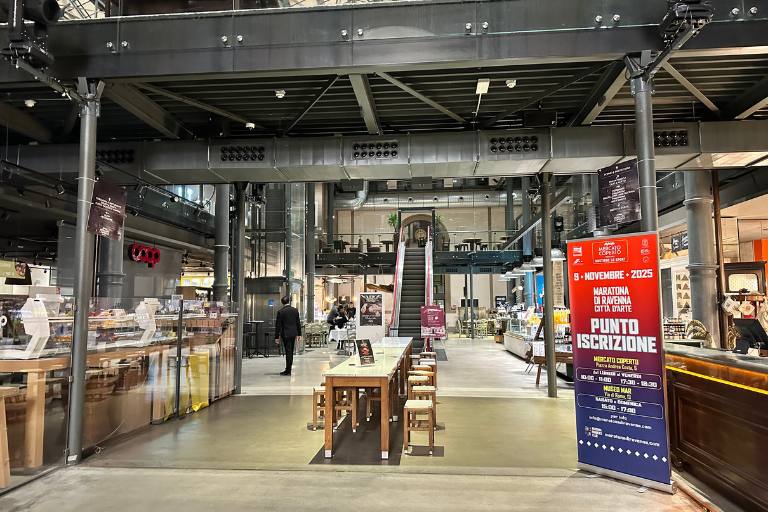
- Lunch: Piadina from a local spot or the Mercato Coperto
- Afternoon: Sant’Apollinare Nuovo, Dante’s tomb and a walk through the Zone of Silence
- Extra time: Arian Baptistery or a quick stop at MAR
Two days in Ravenna
- Day 1: Mosaics, Dante’s tomb, Zone of Silence and the historic centre
- Day 2: Byron Museum at Palazzo Guiccioli, mosaic workshop, Sant’Apollinare in Classe by bike, dinner at Ca’ de Ven
Three days in Ravenna
- Day 1: Mosaics and the historic centre
- Day 2: Literary Ravenna — Dante, Byron, MAR and a workshop
- Day 3: Bike to the Po Delta, Marina di Ravenna or explore the coast
Sustainable travel in Ravenna
Ravenna takes sustainable tourism seriously. The city launched the Footprints Project, funded by the European Urban Initiative, to create a tourism model that respects both the environment and the cultural heritage that makes Ravenna special.
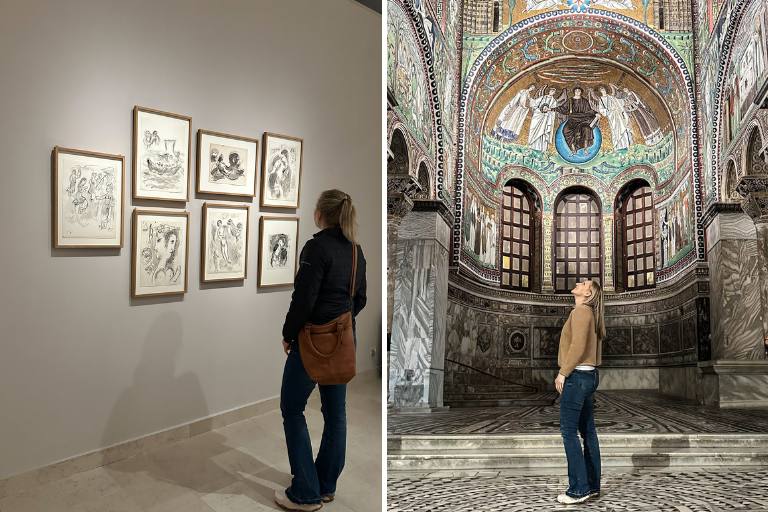
I was invited by the Ravenna tourism board to experience the city’s tourism offerings as part of this project. The goal is simple: encourage visitors to make thoughtful choices that protect the city’s treasures while still enjoying everything it has to offer.
In practice, sustainable travel in Ravenna is easy. Rent a bike (there is a welcome hub outside the train station), and you can reach most sites without a car. Several hotels hold green certifications and source food locally. Supporting mosaic workshops and locally run restaurants makes a real difference too.
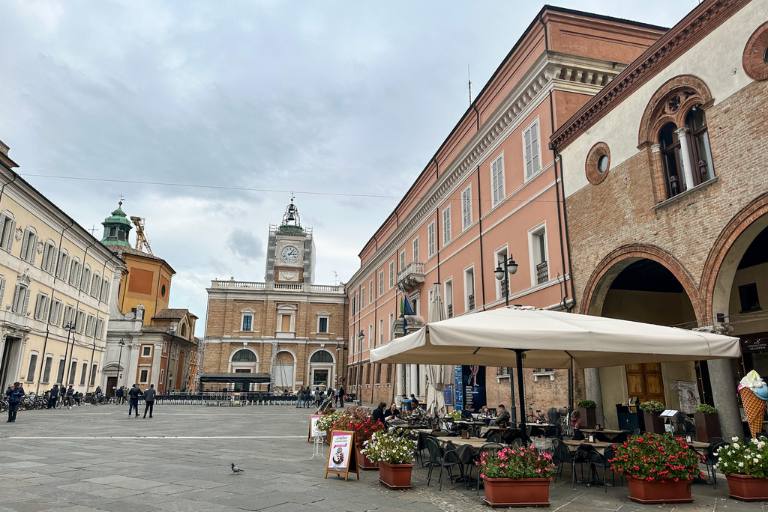
Cities like Venice, Florence and Rome struggle with overtourism that damages historic sites and pushes out residents. Ravenna is building a different model, one based on slower travel, cultural immersion and longer stays.
Where to stay in Ravenna
For most first-time visitors, the historic centre is the best place to stay. You can walk to the main mosaic sites, Dante sights, restaurants and museums without needing transport.
For a stay with character, look at small boutique hotels in converted historic buildings. Albergo Cappello occupies a Renaissance palace with original frescoes, beamed ceilings and an intimate courtyard. It blends history with modern comfort.
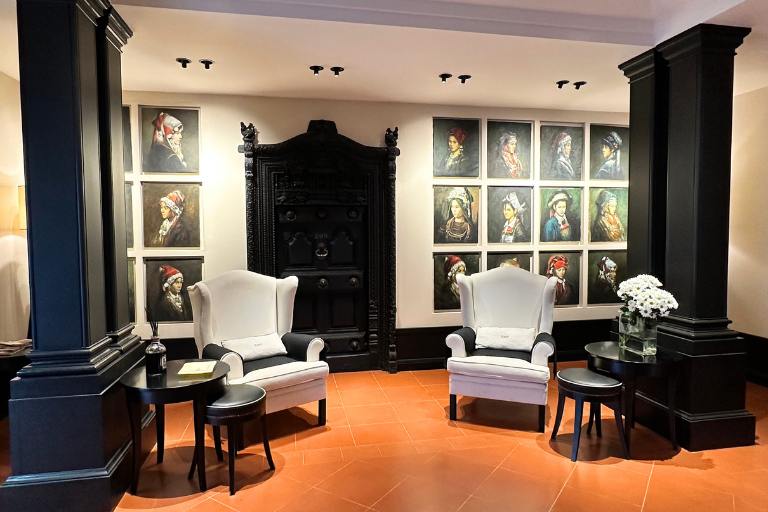
Santa Maria Foris offers a unique experience in a restored monastery building. The rooms maintain a sense of history while providing all the comforts you need. It’s peaceful, well-located, and run by people who genuinely care about hospitality. I really enjoyed staying here.
If sustainability matters to you, several eco-conscious hotels in Ravenna use renewable energy, source local food for breakfast, and minimize waste. Ask about green certifications when booking.
Where to eat in Ravenna
Ravenna sits in Emilia-Romagna, one of Italy’s great food regions. The local cuisine draws from both the inland Romagna tradition and the coastal Adriatic influence.
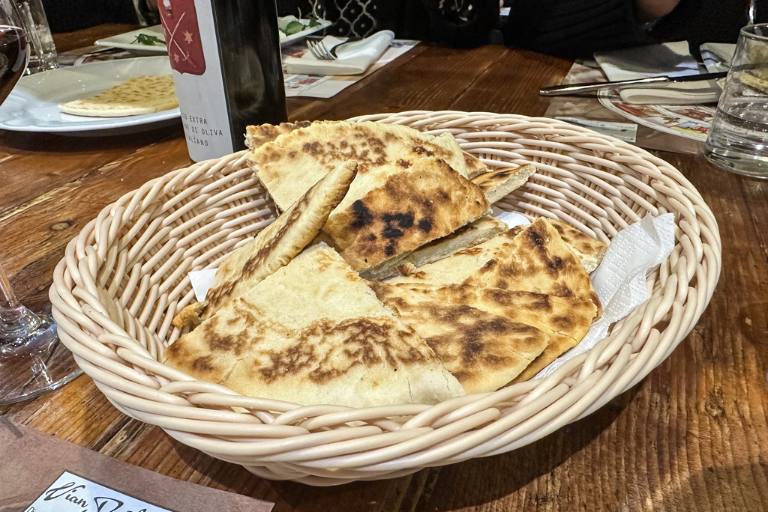
Piadina is the signature street food here. This thin flatbread is cooked on a griddle and filled with cheese, cured meats, or vegetables. You’ll find it everywhere, from market stalls to sit-down restaurants. It’s simple, delicious, and perfect for lunch between monuments. Traditionally, piadina is made with lard, so keep that in mind if you’re vegetarian.
Being close to the sea means excellent seafood. Look for restaurants serving brodetto (fish stew), grilled Adriatic fish, and fresh clams with pasta. The local approach favours simple preparation that lets the quality of the ingredients speak.
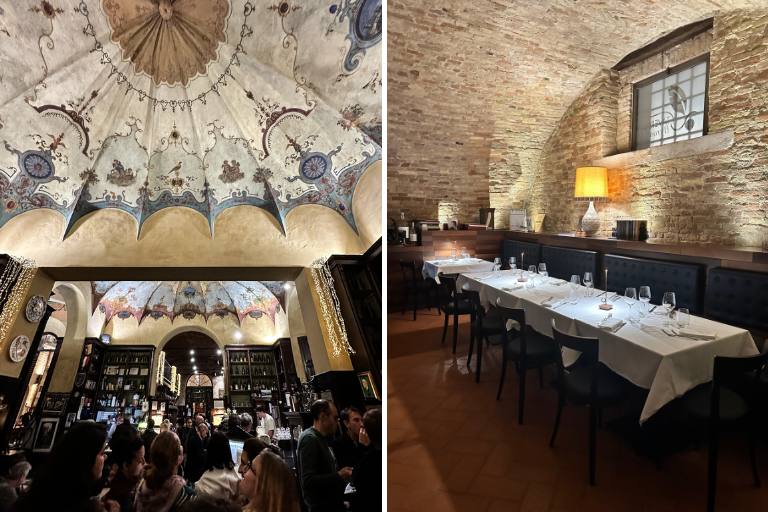
Handmade pasta, especially cappelletti and other stuffed pastas, is commonly used here. There are many great restaurants to choose from, but if you want history and tradition, head to Ca’ de Ven. This local institution, housed in a 16th-century building, is known for its piadina and regional wines. It also has spectacular ceilings.
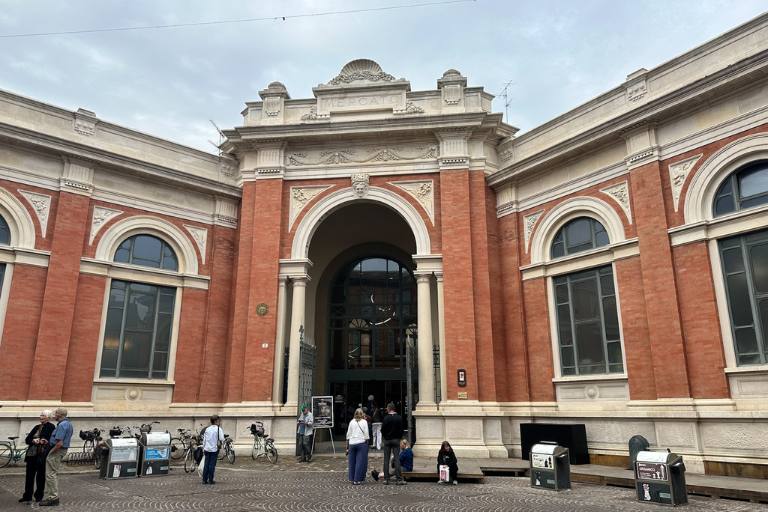
The Mercato Coperto (covered market) in Piazza Andrea Costa is also a great option to sample local flavour. Vendors sell fresh produce, cheese, meat, and prepared foods. Grab supplies for a picnic or eat at one of the on-site restaurants.
Don’t skip the wine. Emilia-Romagna produces excellent Sangiovese reds and Albana whites. Ask for local recommendations as servers are usually happy to suggest pairings.
Final thoughts on visiting Ravenna
One of the things I love most about living in Italy is being able to discover amazing cities that many tourists don’t get a chance to. Ravenna is a great example of a destination that will make you see Italy differently, as most people don’t consider the Byzantine influence here and all it offers visitors. There are many things to see in Ravenna for every kind of traveller.
Plan to stay at least two full days. Three is better. Give yourself time to see the major sites without rushing, to bike to the coast, to linger over lunch and stumble onto smaller churches and quiet corners that don’t make the guidebooks.
I think you will fall in love with Ravenna as much as I did. Just be warned, after one visit, you’ll start planning your return before you even leave. You can thank me later.
@amongstromans Imposing and majestic, the Basilica of Sant'Apolinare in Classe sports a 30 metre-high façade and is almost twice as long. It has been defined as the greatest basilica of the Early Christian period known today. Inside this 6th-century church, you'll discover stunning architecture and spectacular Byzantine mosaics. Definitely a must-do when visiting Ravenna. Things to do in Ravenna | Ravenna Italy | Byzantine mosaics | Church decor | Discover Italy #fyp #architecture #arttok #ravenna #italytiktok ? Take Me To Church – Hozier